
NEW PATIENT CHIROPRACTIC CONSULT

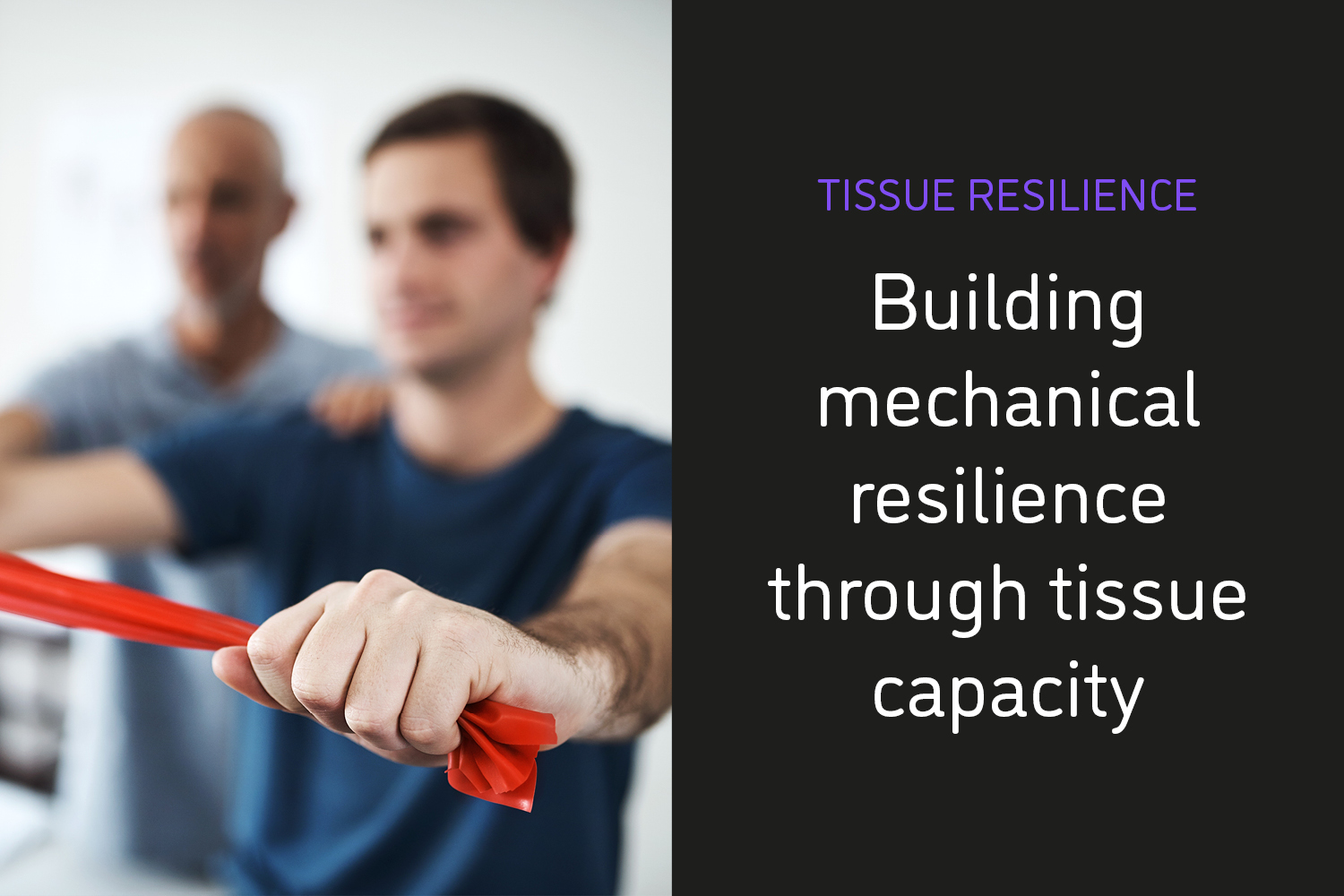
Resilience is often described as a mental trait, but the body has its own physical version. Every day, your musculoskeletal tissues absorb and respond to the forces of movement, posture, and gravity.
Understanding how tissues manage load is essential when thinking about discomfort, recovery, and long-term durability. It’s also an important part of how chiropractic care supports spinal function.
Every tissue in your body has a certain capacity to tolerate force. This applies not only to muscles, but also to ligaments, tendons, spinal discs, and joint surfaces.
Capacity refers to how much load a structure can handle before it becomes irritated or sensitised. If the load stays within that limit, the tissue generally copes well. If the load exceeds it, symptoms may appear.
A helpful way to think about this is as a container. Daily activities such as sitting, walking, lifting, or exercising all pour load into that container. If the volume remains manageable, the system adapts. If it repeatedly overflows, tissues can become uncomfortable.
Capacity isn’t fixed. It can increase or decrease depending on how you use your body.
Muscles often respond relatively quickly to training. Connective tissues, however, adapt at a slower pace.
Ligaments and tendons have a more limited blood supply and remodel gradually. Their structural changes occur over months of consistent, manageable loading. This means patience is essential when building durable tissue capacity.
If demands rise too quickly, connective tissues may not have had time to strengthen appropriately. The result isn’t weakness in a general sense, but a mismatch between load and preparedness.
Long-term resilience is built through steady exposure, not sudden effort.
Many episodes of discomfort follow a rapid change in activity. Someone who has been relatively inactive might spend an entire weekend gardening, or begin an ambitious exercise programme without gradual preparation.
In these situations, the load placed on the tissues rises sharply, but capacity hasn’t yet expanded to meet it. The tissues become sensitised because they’re being asked to handle more than they’re ready for.
The activity itself isn’t inherently harmful. The issue lies in the abrupt increase.
Understanding this helps shift the focus away from blame and towards planning. Gradual progression allows capacity to grow alongside demand.
When a spinal joint isn’t moving optimally, force may not distribute evenly through the surrounding structures. Instead of being shared across multiple segments, the load can concentrate in a specific area.
Repeated focal loading can challenge local tissue capacity, even during everyday activities. Over time, this may contribute to irritation or discomfort.
A chiropractic adjustment aims to improve joint motion within the spine. When segments articulate more consistently, forces can be shared more evenly. Balanced movement encourages more efficient load distribution, rather than repeated stress on one structure.
This approach doesn’t replace strengthening or graded activity. It complements them by supporting mechanical efficiency within the spinal system.
Physical resilience develops through intelligent, progressive loading. When tissues are exposed to manageable challenges on a consistent basis, they adapt.
The key is respecting the pace of biological change. Capacity expands gradually. Sudden spikes tend to disrupt rather than build.
By thinking long term, you create a body that’s better prepared for unpredictable demands. A system with higher capacity doesn’t avoid load. It handles it more comfortably.
Supporting tissue resilience means aligning activity, recovery, and spinal mechanics in a way that allows adaptation to occur steadily. Over time, that steady process builds durability that lasts well beyond any single episode of discomfort.
