
New Patient Chiropractic Consult

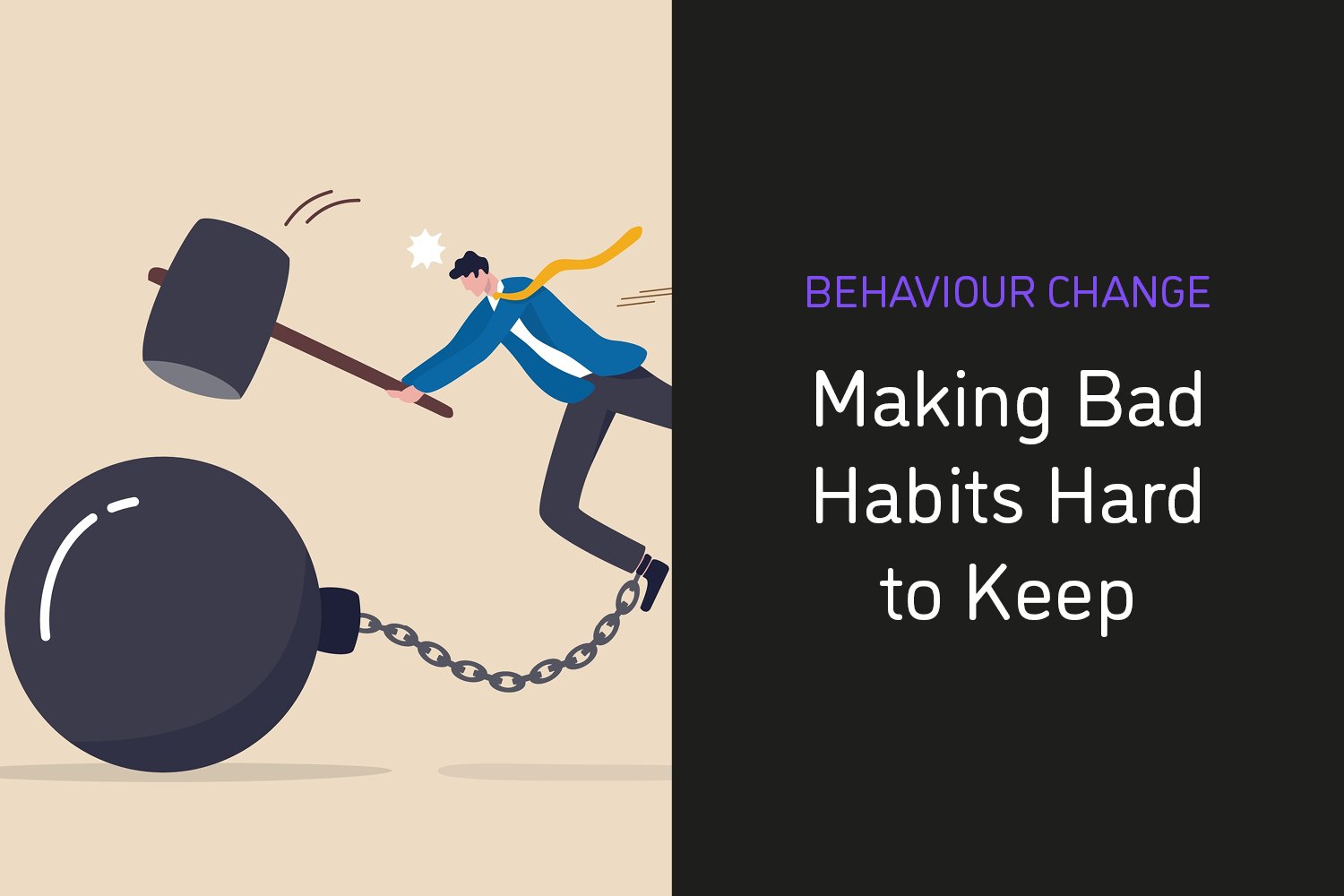
We often think of habits as choices. But most of the time, they’re reactions — automatic responses to our environment, our stress levels, and even the way we sit or stand.
In particular, when it comes to posture and movement, the “wrong thing” is often the easiest thing. Slouching feels natural. Tension creeps in unnoticed. And before long, pain becomes part of the routine.
Unfortunately willpower alone isn’t enough to break a pattern that’s been rehearsed for years. But inconvenience is.
If you make the bad habit harder to perform — even slightly — you interrupt the autopilot. You create a moment of awareness. And in that moment, you have the chance to choose something better.
Bad habits don’t happen in a vacuum. They’re shaped by cues — physical, emotional, and environmental. A low, deep sofa encourages slouching. The ping of a notification prompts us to crane our necks. Stress triggers jaw clenching or shoulder hunching.
These cues are the starting point of the habit loop. The body responds automatically, often in ways that feel comfortable short-term but cause strain over time.
Recognising these triggers is the first step. Are you leaning forward to see your screen? Holding your breath when anxious? These small patterns add up; and they’re worth noticing.
Disruption doesn’t require force. It requires friction. The goal is to make the unhealthy habit less convenient. To force it out of your subconscious and into your conscious awareness.
Try placing a sticky note on your monitor to remind you to sit tall. Use a lumbar cushion that nudges your spine into better alignment. Set a timer to stretch every hour.
These micro-interruptions don’t fix the habit but they do slow it down. They create a pause. And in that pause, you can choose a different path.
Your space shapes your behaviour. If your environment makes poor posture easy, it will keep happening. But small changes can shift the balance.
These tweaks don’t need to be perfect. They just need to make the unhelpful pattern less convenient — and the better choice more accessible.
Sometimes, the body needs help remembering what “right” feels like.
When tension has become a long-term habit, it can feel normal, even when it’s not. Chiropractic care offers a reset. Gentle adjustments help restore alignment, reduce strain, and reintroduce ease into movement.
This reset isn’t just physical — it’s also sensory. It gives your nervous system a new reference point. And once your body has experienced better alignment, the old patterns start to feel “off.” That discomfort becomes its own form of friction, making it harder to slip back into habits that no longer fit.
Breaking a bad habit isn’t about perfection. It’s about intention.
By making the wrong thing harder to do, you clear the path for something easier. And better. You create an environment where good choices aren’t just possible — they’re actually the easiest option.
This is how change begins. Not with force, but with design. Not with guilt, but with awareness. And in that space, healing has room to take root.
