
NEW PATIENT CHIROPRACTIC CONSULT

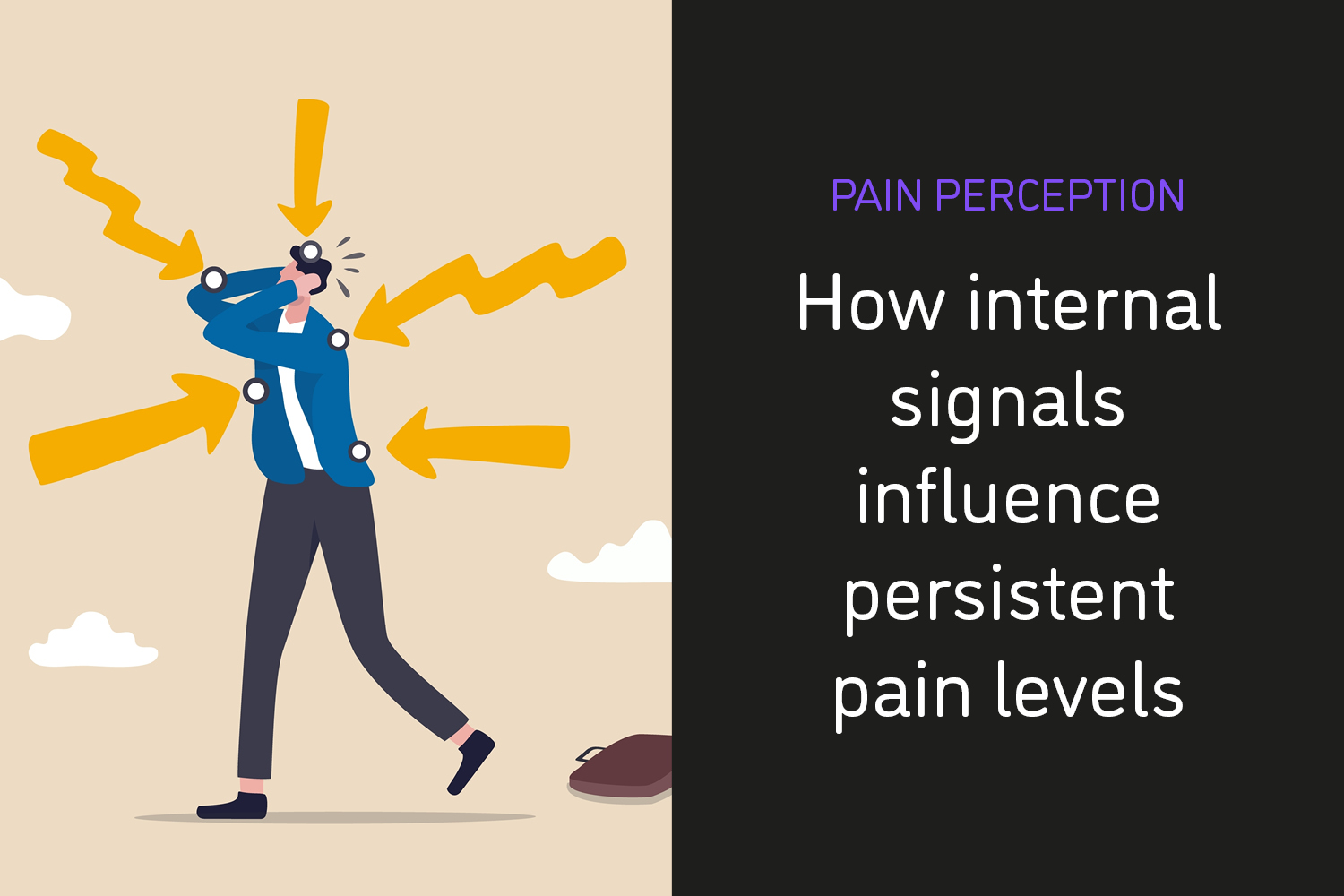
Pain is rarely just a local event. It’s an experience shaped by the nervous system, context, and interpretation.
In chiropractic care, this broader understanding is important because we don’t view discomfort as purely structural. Instead, we recognise that how the nervous system processes information plays a meaningful role in how pain is experienced.
One of the most important influences on that interpretation is a sensory system many people have never heard of. It’s called interoception, and it plays a quiet but powerful role in how we experience our bodies.
By considering how internal signals are processed, we can better understand why persistent pain sometimes continues even when tissues appear structurally sound.
Interoception is often described as our eighth sense. It’s the awareness of the internal state of the body. It’s how you know you’re hungry, thirsty, tired, or tense. It’s the sensation of your heart beating during exercise, or the subtle awareness of your breathing slowing as you relax.
This internal feedback system constantly informs the brain about what’s happening inside. It provides a running commentary on muscle tone, temperature, pressure, and visceral sensations.
When interoception is balanced, these signals are informative but not overwhelming. They guide behaviour without demanding constant attention.
A sensation on its own is simply data. For it to become pain, the brain must interpret it as threatening.
The nervous system continuously evaluates incoming signals and asks a basic question: is this safe? If the answer leans towards danger, the experience may be labelled as pain.
Context matters. Past experiences, stress levels, and emotional state can all influence how the brain interprets the same physical input.
This is why two people with similar physical findings may describe very different pain experiences. The interpretation process differs.
Pain, in this sense, is protective. It’s designed to encourage caution. But sometimes that protective system becomes overly sensitive.
In persistent pain states, the nervous system can shift into heightened alertness. Signals that would normally be processed quietly in the background may become amplified. It’s similar to turning up the volume on a speaker.
Subtle sensations become more noticeable. Muscle tension that would once have gone unnoticed might now feel intense.
This amplification can create hyper-vigilance. The brain pays close attention to every internal fluctuation. Neutral sensations may be interpreted as warnings.
The system isn’t broken. It’s protective. But the threshold for danger has lowered.
Chiropractic care can contribute to this process by providing controlled and predictable sensory input. An adjustment introduces a brief, specific stimulus to the nervous system. For a sensitised system, consistent and measured input can help reinforce a sense of safety around movement.
The aim isn’t to force change or eliminate pain directly. Instead, it’s to reduce unnecessary threat interpretation by supporting balanced sensory processing.
Predictability and precision matter. They allow the nervous system to experience input without alarm.
When pain has persisted, trust in the body can erode. Movements may feel risky, and internal sensations may seem unreliable.
Part of recovery involves rebuilding that trust gradually. This includes listening to internal signals with curiosity rather than immediate fear.
As the nervous system settles, interoceptive signals can be interpreted with greater nuance. Not every sensation needs to trigger protection.
A calmer system is better able to distinguish between genuine threat and normal bodily fluctuation. Over time, this fosters a renewed sense of safety within your own body.
Understanding interoception doesn’t remove complexity from pain, but it does provide perspective. It reminds us that experience is shaped not only by structure, but also by perception.
