
NEW PATIENT CHIROPRACTIC CONSULT

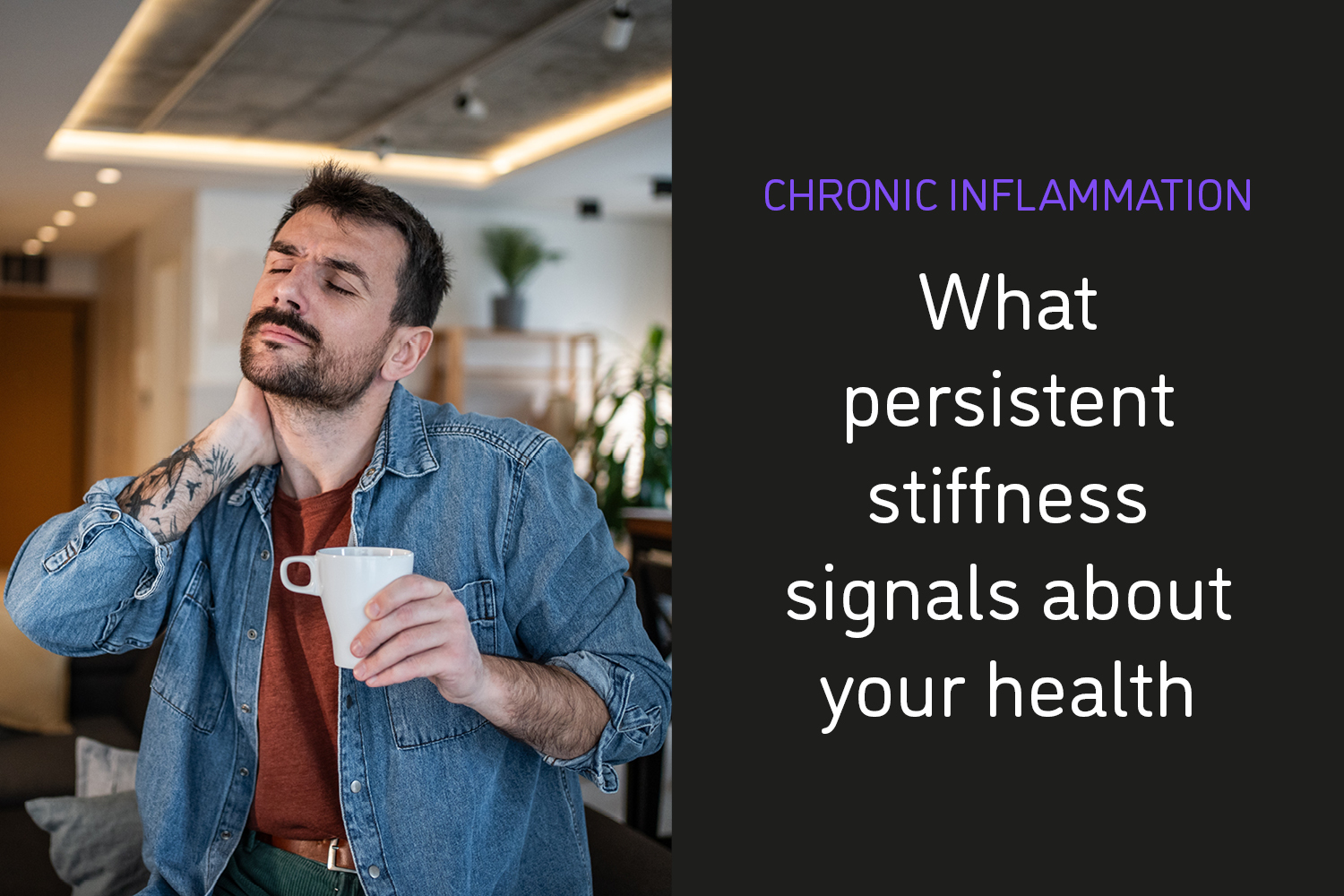
Persistent stiffness can be a frustrating experience. It’s that feeling of being tight and restricted, often without a clear reason. You haven’t injured yourself, nothing dramatic has happened, yet something doesn’t feel quite right.
We tend to view these sensations as problems to be fixed. But sometimes it’s more helpful to see them as communication from your body. Understanding these signals is an important part of the chiropractic journey, because it allows us to work with your body, not just on it.
Inflammation often gets a bad reputation, but it’s a vital and intelligent process. When you sprain an ankle, the swelling and warmth are signs that your immune system is actively managing the injury. That short-term response is protective. It creates the right conditions for healing.
Difficulties arise when inflammation becomes persistent and low-grade. Instead of a dramatic flare-up, it can feel more like a constant low hum in the background. This kind of inflammation isn’t an attack. More often, it’s a signal that your body is trying to manage ongoing demand.
From a systems perspective, inflammation reflects regulation. It tells you something is requiring attention, even if it’s not obvious.
Your body is constantly dealing with different forms of load. That might include prolonged sitting, repetitive movements, emotional stress, reduced sleep, or simply not enough recovery between busy days.
On their own, these stressors may be manageable. When they accumulate, however, they place greater demand on your body’s resources.
Over time, that cumulative load can trigger a low-level immune response. Your system is effectively trying to supervise and stabilise its environment. There may be no clear injury, yet you begin to notice stiffness, fatigue, or a general sense of achiness.
It’s less about damage and more about sustained demand.
It’s easy to assume that if something feels stiff, it must be damaged. In reality, persistent stiffness is often linked to increased sensitivity rather than structural breakdown.
When the local environment is under pressure, nerves in the surrounding tissues can become more responsive to movement and touch. Muscles may tighten slightly as a protective response. Joints can feel restricted even when there’s no tear or strain present.
The stiffness is real. The driver, though, is signalling rather than injuring.
Understanding that distinction changes how you respond. Instead of assuming something is “wrong”, you can start asking what your body might be trying to regulate.
Chiropractic care does not directly treat inflammation. Its focus is on improving movement and reducing unnecessary mechanical load, particularly within the spine.
When spinal joints move more freely and with better coordination, one source of ongoing physical stress is reduced. With less mechanical irritation to manage, the nervous system is better positioned to maintain steady regulatory control.
Reducing load doesn’t eliminate inflammation outright, but it can ease one contributor to overall system strain.
Persistent stiffness isn’t something to fear. It’s information. It suggests that your total system load may be higher than your body would prefer.
When you learn to listen without alarm, you can begin making small, supportive changes. That might mean improving posture, building in recovery time, managing stress more intentionally, or addressing movement patterns.
Responding with curiosity rather than frustration allows you to work alongside your body’s signals. Over time, that shift in perspective can be just as important as any specific intervention.
